
When people learn I am an author of mediæval novels, they often ask why is it called the ‘Dark Ages’. To many academic historians the Dark Ages are a thing of the past, a term no longer used. Some medievalists have even called for use of the term to be discouraged in popular culture, and others challenging popular myths are well worth reading (Digging into the Dark Ages download for free). However, as a fiction author I like to connect myself with the term. I have always loved the Dark Ages, and heres why.
In historical interpretation the title Dark Ages encapsulates the exact opposite of darkness, by capturing the imagination. The ‘Dark Ages’ is a powerful non-specific term, exclusive of any strict chronology, linguistic, religious, cultural or geographical group. This makes it a powerful and versatile tool of engagement, which casts the light of public interest.
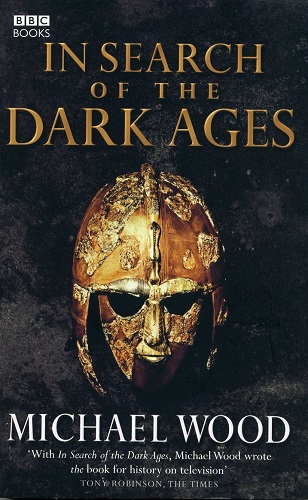
One of the first history books I read was In Search of the Dark Ages (BBC Books 1981, still in print) by Michael Wood, and perhaps the title alone launched my interest in early medievalism. Similarly, I was led to read books entitled ‘barbarians’, when dealing with the Roman period, precisely to disprove the ancient Britons were barbarians. The term Viking Age also conjures images of pillaging raiders, written into the Icelandic sagas generally as piratical predators around Scandinavia, the Baltic and the British Isles. Barrowed from the Scandinavian languages, vikingr and viking usually imply a neutral person of no particular ethnicity with the activity of expedition, when today the term Viking influences a pejorative and restrictive meaning. Use of the term Viking has been very influential in promoting the Jorvik Viking Centre, ‘the original viking encounter’, as a museum and major tourist attraction, which has been able to influence the interpretation of Viking Age to one of exploration, trade and settlement.
As a term for historical research the Dark Ages does not really mean anything, and if anything is misleading as there was nothing dark about the age at all. Origins of the term may have been influenced by some early scholars who used ‘dark’ to indicate their lack of knowledge or they could not find literature of the time (14th century Italian poet Petrarch, and 17th century Caeser Baronius who used the term saeculum obscurum). Academics generally accept the term implies an age which has fallen into intellectual ‘darkness’ before the light of Renaissance, when they point out we know quite a bit about Anglo-Saxon and medieval England. For me the Dark-Ages are a time when our relationship with the patterns of the earth and her living ecosystems were the brightest, and with the enlightment of the middle-ages, which suggests transition from these earlier times, we lost our connection with the magic of the natural world.
The evocative power and neutrality of the term ‘Dark Ages’ when applied to Britain, far exceeds the negative connotations and pernicious myths in bringing the early medieval period into the imagination of the public. The Dark Ages is steeped in curiosity, perhaps feeding a romanticised view of history, and yet without it, I may never have had such a positive interest in our early medieval heritage.
Opinions and views expressed in this post or comments are the authors own (Terms & Conditions).