
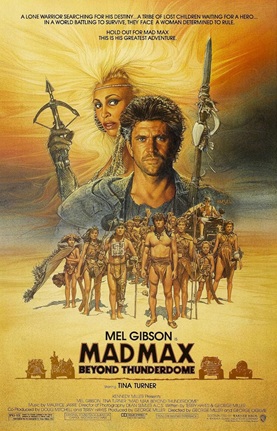
The Mad Max franchise is generally considered the progenitor for the modern post-apocalyptic wasteland genre, focusing on the collapse of society and a nomadic existence, and perhaps very relevant for today. I do not usually comment on film and music here, although both are a big part of my life which have highly influenced my writing, film and music together create a powerful media. The third instalment of the original trilogy, Beyond Thunderdome, does not usually get rated very highly in the series, but as an alternative, here is my take.
- Furiosa: A Mad Max Saga (2024)
- Mad Max Beyond Thunderdome (1985)
- Mad Max: Fury Road (2015)
- Mad Max 2 (1981) The Road Warrior
- Mad Max (1979)
I place the first two movies bottom of the list not because they are low budget, and although display gritty realism, ultimately, they lack the depth of the later films. Fury Road features some good cinematography, but with reduced world-building to focus on a high-octane road chase, ends up under delivering on the final payoff. Thunderdome, although typically 80s and idealistic in concept, established the essential world-building canon enabling the development of later films, and perhaps more importantly, underscores man-made environmental disaster, and devastation caused by the automobile.
Beyond Thunderdome is not without its critics, often perceived as displaying two separate themes in one film. Originally the script was not intended to be a Mad Max movie, and shot by two different directors, who obviously had their own visions (Directors George Miller and George Ogilvie and written by Terry Hayes and Miller). Thunderdome brought together dystopian civilisation in a post-apocalyptic wasteland and hope for an utopian future of our world. These world-building origins of Thunderdome, having been limited in Fury Road are delivered by Furiosa along with a more developed character driven story. The lyrics of the acclaimed theme song for Thunderdome, We Don’t Need Another Hero (Thunderdome) 1985 brilliantly sung by Tina Turner, written and composed by Graham Lyle and Terry Britten, says it all.