
Despite the UK moving toward a more responsible built environment procurement of the Passivhaus standard still remains a difficult route to energy efficiency. Due to the specialist nature of Passivhaus construction and design, finding contractors with the necessary expertise to undertake project work is not easy.
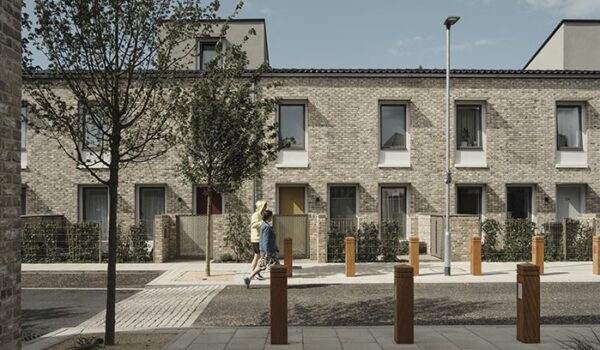
Norwich City Council have been at the forefront of Passivhaus social development in the UK, developing a Passivhaus construction framework in 2015 to provide an efficient procurement mechanism for the delivery of their homes’ energy efficiency housing programme. Since then, they have delivered large scale projects in the Norfolk region, including the ward winning Goldsmith Street (RIBA Stirling Prize & Neave Brown Award for Housing 2019).
The Fabric First framework with an estimated project value of £300 million is available to all local authorities and their subsidiaries, as well as housing associations, and managed by Hamson Barron Smith (part of NPS Norwich) on behalf of Norwich City Council. The framework is divided into three lots, with contractors procured to provide the range of services and works necessary to deliver passive housing and associated infrastructure.
Lot 1 (1-20 dwellings) with 7 contractors listed. Lot 2 (21-110 dwellings) with 7 contractors listed, and Lot 3 (111+ dwellings) with 4 contractors listed.
There is currently a lack of construction contractors in the UK with the experience of delivering Passivhaus developments, which makes the process of finding a builder more difficult. The variation in project cost estimates, from both cost consultants and tendering contractors, range from 5% to 30%. Research suggests the construction industry skills in the UK are substantially lower than continental Europe, principally because innovation is not as well supported. The early design required for Passivhaus developments means projects will likely be more expensive than a traditional build, at least until the move toward a higher energy standard becomes more mainstream. However, as some councils have demonstrated cost benefits may be gained after the project has been completed, and an established procurement route could reduce expenditure on future projects.
Housing in the UK is among some of the least energy efficient in Europe. The good news is UK standards are slowly improving to catch-up with Europe, implied by the new Home Energy Model, although the effectiveness of this methodology has yet to be demonstrated, and is some way behind the Passivhaus standard. More local authorities are going beyond government standards and are joining the move to end fuel poverty by devising ways to procure Passivhaus or following others who learnt how to.